In the previous update, we talked about tension—how the hunt works, how noise attracts the T-1000, and how the threat of an ambush is always hanging over you.
The second major pillar of the game is something very different: Growth.
One of the strongest feelings players report during playtests is how much stronger they feel as the game progresses. Characters grow individually, but the team grows together as well.
If you compare Chapter 1 to Chapter 3, the difference is dramatic. By the later stages of the game, you’re far more capable of completing missions, surviving combat, and pushing back against the T-1000. That’s because the game constantly allows you to improve your characters in several different ways.
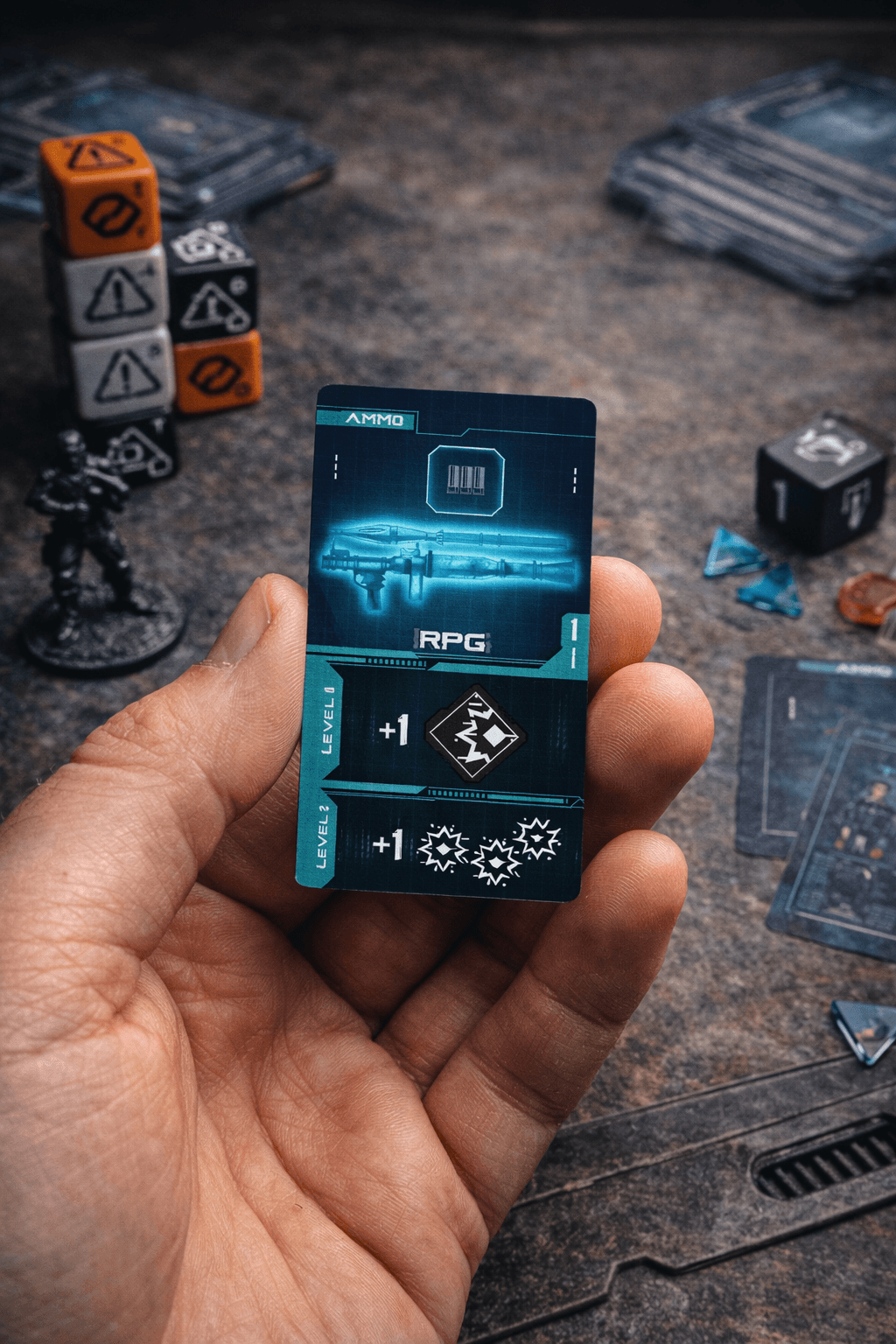
You gain more dice, increasing your stamina and your chances of success. You upgrade your existing dice, improving results and reducing noise. You acquire weapons, equipment, and allies that expand what you can do. And you develop character abilities, building along different upgrade paths.
There isn’t just one way to grow stronger. Players can specialize, diversify, or build around the strengths of their team. We’ll explore these systems in detail in future updates, but the important thing here is the feeling of momentum. With each chapter, you’re better equipped for what lies ahead.
What makes this system particularly interesting is that you don’t grow alone.
In Terminator, players often grow together. When a hero attempts a mission, other characters at the same location can join them—with the player’s permission. That means you’re not just watching someone else take their turn. You’re actively participating, contributing dice, helping succeed, and improving your character even when it isn’t technically your turn.
It keeps everyone engaged, and it reinforces the idea that the team is working as a unit.
There’s also a team experience grid that rewards coordinated effort. As players commit dice to missions, they can place those dice into the grid. Completing certain rows or columns unlocks shared benefits for the entire team that contributed. We’ll go deeper into this system later, but it’s another way the game encourages collaboration rather than isolated play.
That said, once this system came together, it created two design challenges.
The first was that players quickly realized there was a strong incentive to always stay together. Working as a group meant more support, more upgrades, and safer missions. While teamwork is important, the game also revolves around moving across different locations, and we didn’t want movement to become irrelevant.
The solution was to introduce missions that require characters to act alone or in smaller groups. Sometimes the best rewards come from taking that risk—venturing out without the full team. It creates an interesting trade-off: stronger rewards, but greater danger if the T-1000 shows up.
The second challenge was bigger.
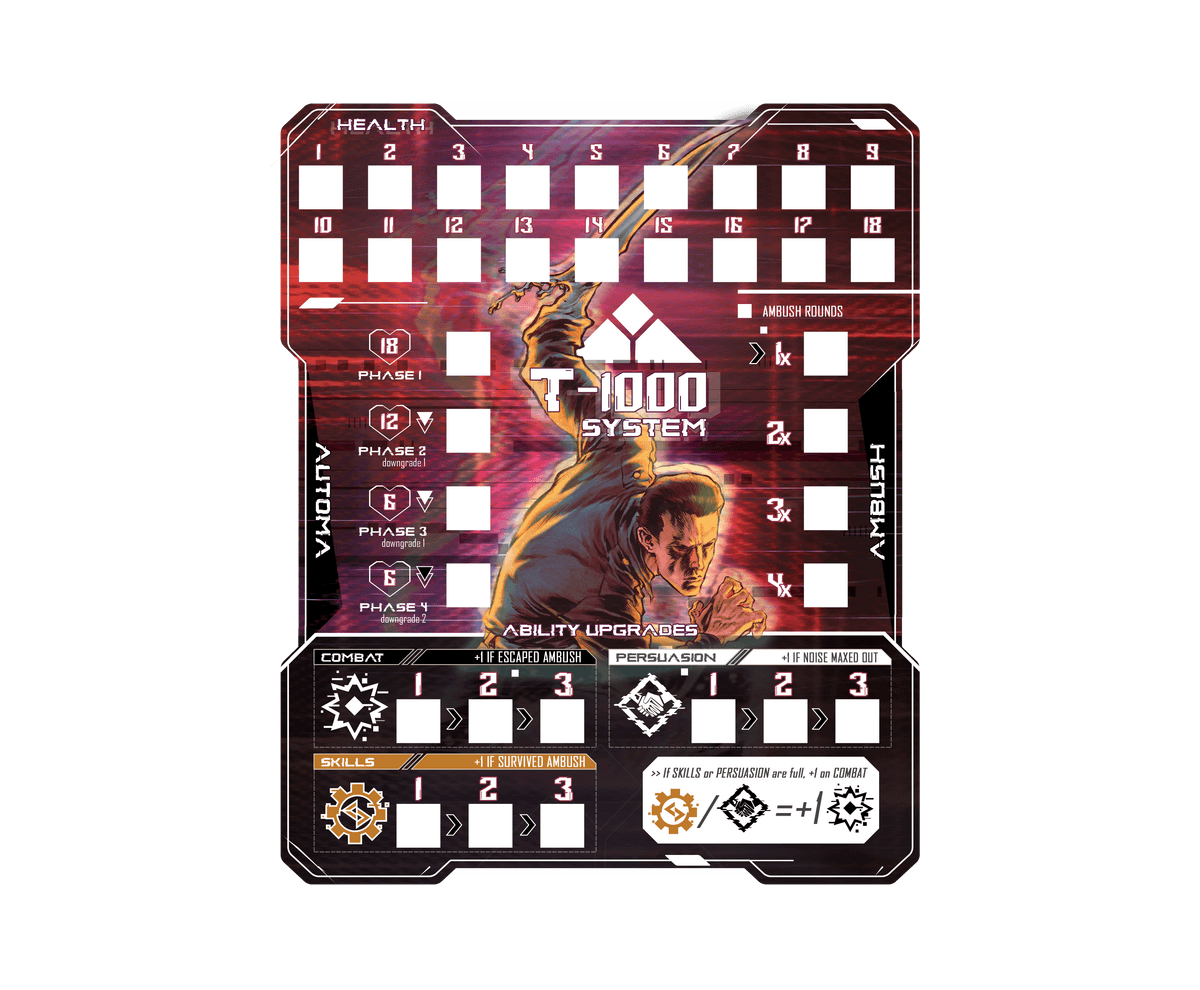
By Chapter 3, players had grown so powerful that they were sometimes able to overwhelm the Terminator. Clearly, if the heroes were evolving this quickly, the T-1000 needed to evolve as well.
At first, the solution seemed obvious: simply upgrade the T-1000 at the end of each chapter. In some playtests this worked well. In others, it created problems. If players had a slow start or struggled early in the game, the T-1000 would still scale upward on schedule, and the gap could become too large.
So we tried something different. Instead of upgrading the T-1000 on a fixed timeline, we tied his evolution directly to your progress.
Every time you complete an objective, the T-1000 adapts. Thematically, this represents him learning—studying your strategies, embedding himself deeper into the system, gaining resources and intelligence. Mechanically, it means he grows stronger at the same pace that you do.
You’ll notice this on the objective cards themselves. Each completed objective advances the team—but it also unlocks new capabilities for the T-1000. As you move closer to your Final Mission, he becomes more dangerous.
This creates the balance we were looking for.
Players feel stronger with every chapter, but the hunter pursuing them is evolving at the same time. By the time you reach the Final Mission, both sides are operating at full capability.
---
In the next update, we’ll start unpacking some of the core systems that power these encounters; specifically the three pillars of gameplay: combat, persuasion, and skill, and how missions and encounters are built around them.